Genicular Artery Embolization (GAE)
A non-surgical treatment for ongoing knee pain. GAE calms the inflammation behind arthritis pain so your knee hurts less, with no cut, no stitches, and a same-day trip home.
What is GAE?
GAE is a treatment for ongoing knee pain that doesn't require surgery. Using live X-ray to guide the way, Dr. Ghodadra threads a thin, flexible tube through a tiny pinhole in your foot or upper thigh and steers it to the small arteries that feed your knee. Arthritic knees grow extra tiny blood vessels that fuel swelling and pain. GAE gently blocks those problem vessels with microscopic particles, calming the inflammation so your knee hurts less. No cut, no stitches, and you go home the same day.
How it works
When a knee wears down with arthritis, the lining of the joint becomes inflamed and grows a tangle of extra tiny blood vessels. These vessels feed the inflammation and carry pain signals, which keeps your knee swollen, stiff, and sore. GAE blocks those extra vessels. With less blood flowing to the inflamed lining, the swelling settles down, the pain eases, and many people move more comfortably again.
Blocking these vessels does a few things:
- Less blood reaches the inflamed joint lining.
- The inflammation that drives your pain calms down.
- The extra vessels and the pain signals traveling with them are interrupted.
- Over the following weeks, the irritated lining settles and your knee feels better.
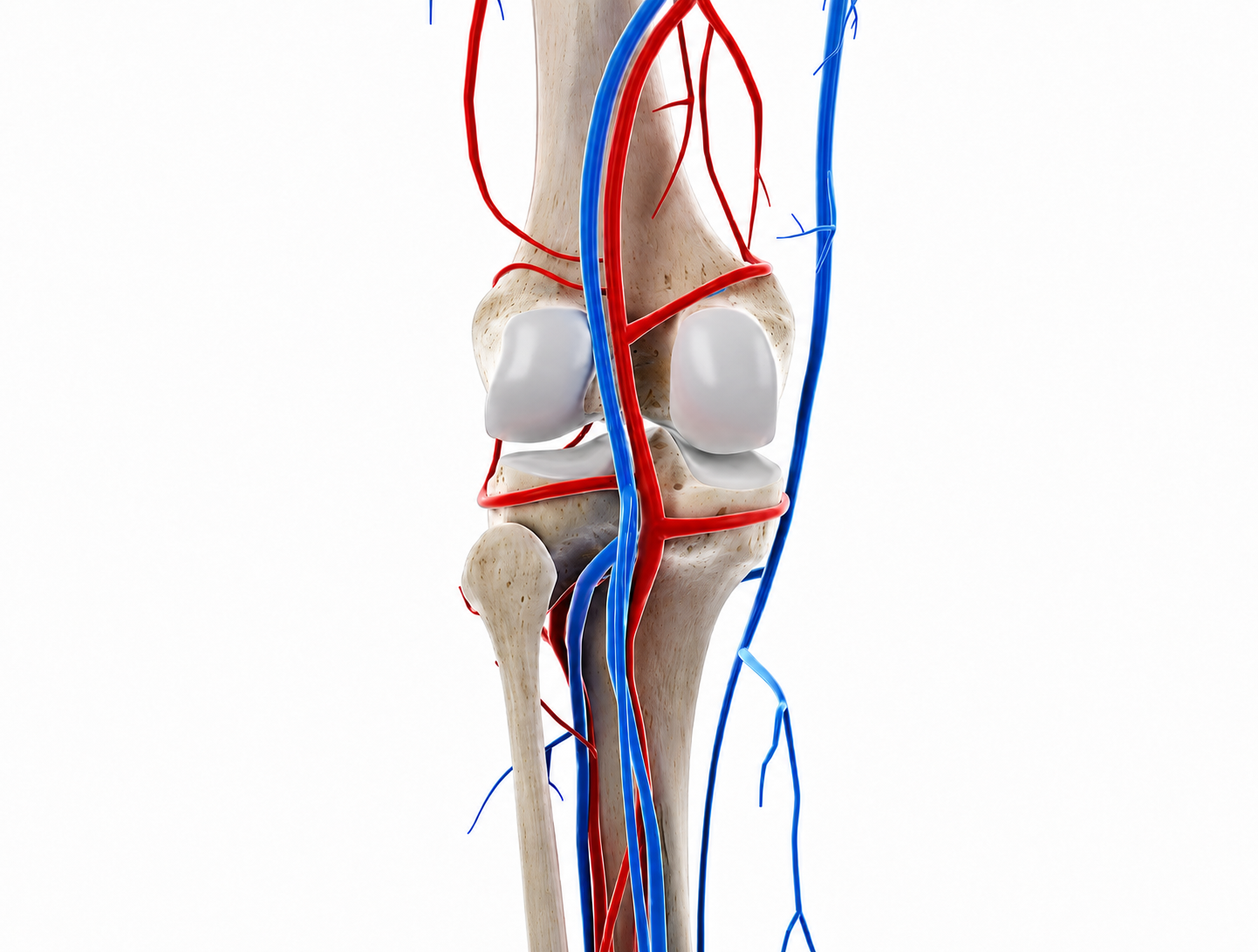
Your knee is fed by a small network of arteries. Before your procedure, Dr. Ghodadra uses detailed X-ray pictures to map these vessels and pinpoint exactly where the inflammation is, so treatment goes only where it's needed and the healthy areas are left alone.
Is GAE right for me?
GAE may be a good option if you have ongoing knee pain from arthritis that hasn't improved enough with the usual first steps, like activity changes, physical therapy, anti-inflammatory medicines, or steroid or gel injections. It's often considered when:
- You've had knee pain for at least a few months despite trying these other treatments.
- You're not ready for knee replacement surgery, can't have it, or would prefer to avoid or delay it.
- You still have pain or swelling in a knee that was already replaced (including a knee that keeps bleeding into the joint), and your surgeon hasn't found a problem that needs more surgery.
When GAE may not be the right choice
GAE isn't right for everyone. It may not be a good fit if you have:
- Poor circulation in the legs that would make the procedure unsafe.
- An active infection in or around the knee.
- Certain types of inflammatory arthritis, such as rheumatoid arthritis.
- Severe, end-stage arthritis where a knee replacement is likely the better answer.
- Pregnancy, or an allergy or health reason that makes the X-ray dye or sedation unsafe.
The best way to find out is a consultation. Dr. Ghodadra will review your imaging, examine your knee, and talk through whether GAE, or another option, fits your situation.
What happens during the procedure
Getting ready
Before your procedure, you'll have a consultation and some imaging (usually an X-ray and an MRI) so Dr. Ghodadra can plan your treatment. A few simple steps help things go smoothly:
- You may need routine blood tests beforehand.
- Tell the team about all your medicines (especially blood thinners) and any allergies, particularly to X-ray dye (contrast).
- You'll usually be asked not to eat after midnight the night before.
- Arrange for someone to drive you home, since you'll have sedation.
The day of
GAE is done in a specialized X-ray suite, and you go home the same day. You'll get numbing medicine at the entry spot plus "twilight" sedation through an IV, so you're relaxed and comfortable, not under full anesthesia. Most people remember little of it.
How long it takes and how it feels
The procedure usually takes about 1 to 2 hours, and you're typically at the hospital for about half a day from check-in to going home. Most people feel only mild pressure and little discomfort. Many say it was much easier than they expected. Some feel a warm or full sensation in the knee, or mild soreness for a few days afterward.
Recovery
Recovery timeline
- Go home the same day with your driver.
- Take it easy for a day or two: avoid heavy lifting, long standing, and strenuous activity for 24 to 48 hours.
- Back to normal quickly: most people return to their usual daily routine within 1 to 2 days.
- Simple bandage care: the pinhole is covered with a bandage and checked at your follow-up.
- Follow-up visits are scheduled over the next weeks and months to see how you're doing.
When the relief comes
Relief from GAE is gradual, not instant. It builds as the inflammation settles.
- Within 2 weeks: many people start to notice less pain.
- By 1 month: most feel a meaningful difference.
- By 3 months: most reach their full benefit.
- After that: people often keep improving as they move and do more.
A newer, evolving treatment
GAE is a newer treatment for knee arthritis. In some cases it's offered as part of a research study or "off-label" (using approved tools for a newer purpose). Dr. Ghodadra helped lead UPMC's GAE clinical trial (NCT04951479) and will clearly explain what this means for you.
Is GAE safe?
GAE has a strong safety record in published studies, and most side effects are mild and go away on their own.
Common (and usually short-lived)
- Some knee aching or soreness for a few days.
- A small bruise-like patch of skin discoloration over the knee that fades over a few weeks.
- Mild bruising or soreness where the tube went in.
- Temporary numbness or tingling of the skin over the treated area.
Less common
- Particles affecting a small area beyond the target. Careful mapping and a precise technique are used to prevent this.
- A small skin sore (rare with modern technique).
- Minor changes on a follow-up MRI that usually settle within a few months without causing problems.
- Infection, bleeding, or a bruise at the entry site (rare).
Rare
- An allergic reaction to the X-ray dye.
- Injury to an artery.
- Pain returning, which may call for a repeat treatment.
Serious problems are uncommon, and Dr. Ghodadra will go over the risks for your specific situation.
Why Dr. Ghodadra
GAE takes a steady, experienced hand. It means guiding tiny tubes through small, delicate arteries close to the skin, joint, nerves, and bone, and treating only the right vessels while protecting everything else. Experience matters, and results are better in skilled hands.
Dr. Ghodadra is an interventional radiologist, a doctor who specializes in these image-guided, pinhole procedures. He helped lead UPMC's GAE clinical trial and cares for you through the whole process, from your first visit to your follow-ups.
Cost and insurance
- Cost can vary depending on your insurance and the details of your care. Ask the office for an estimate and to check your coverage.
- Where it's offered: GAE is available at select major medical centers, including UPMC. UPMC accepts a wide range of insurance plans, and the office can help you confirm yours.
Frequently asked questions
Will GAE hurt?
The procedure itself isn't painful for most people. Numbing medicine plus light "twilight" sedation keep you comfortable. Some people have mild knee aching for a few days afterward, which usually responds to over-the-counter pain relievers.
How long does the relief last?
This varies from person to person. Dr. Ghodadra will talk with you about what's realistic for your knee.
Can I have GAE if I've already had a knee replacement?
Yes, in some cases. GAE has an established role for a replaced knee that keeps bleeding into the joint, and it's being studied for ongoing pain after a knee replacement when no surgical cause is found. Dr. Ghodadra has treated this kind of bleeding with GAE (see "Myra's Story" on UPMC HealthBeat).
Can I still have a knee replacement later if GAE doesn't work?
Yes. GAE doesn't "burn any bridges." You can still have a partial or full knee replacement later if you need one. Many people use GAE to delay surgery or while they aren't ready for it.
How is GAE different from a cortisone shot?
A cortisone shot puts anti-inflammatory medicine into the joint and usually helps for weeks to a few months. GAE works differently: it blocks the extra blood vessels driving the inflammation, and the benefit builds gradually over a few weeks.
Will I be awake during the procedure?
You'll be in a relaxed "twilight" state, comfortable and calm, but not fully asleep the way you'd be with general anesthesia. Most people remember little of the procedure.
How soon can I return to work and exercise?
Most people return to desk-type work and their normal routine within 1 to 2 days. Hold off on hard exercise for about the first week. Dr. Ghodadra will give you specific guidance.
Is GAE the same as a knee nerve treatment?
No. A nerve treatment (ablation) uses heat to quiet the pain nerves around the knee. GAE uses tiny particles to block the extra arteries feeding inflamed tissue. Some studies are comparing the two, and in some people they may even be used together.